Scheduling and bookings
Custom calendar app for scheduling, shifts, and bookings
I build calendar apps and scheduling software to manage availability, appointments, shifts, and reminders when standard calendars are no longer enough.
When a custom calendar app makes sense
A custom solution is useful when schedules, bookings, and shifts must follow specific operational rules: different roles, changing availability, locations, services, time slots, notifications, and sync with tools the team already uses.
Main features
The foundation is a calendar that is simple to use and connected to real processes.
- Shared schedule for operators, customers, locations, or departments
- Bookings with availability, service duration, and confirmation
- Shifts, absences, replacements, and automatic notifications
- Email, push, or other integrable reminder channels
- Sync with Google Calendar, Apple Calendar, or Outlook
- Admin dashboard for control and fast updates
Why not use only a standard calendar
Google Calendar, Apple Calendar, and Calendly are useful for simple appointments. A custom app becomes more appropriate when the calendar has to manage business rules, data, and responsibilities.
- Different permissions for admins, operators, and customers
- Flows connected to payments, documents, internal notes, or CRM
- Activity history and booking reports
- Mobile experience designed for everyday field work
Alternatives and competitors
The market has many horizontal tools for scheduling and booking. They work well for standard processes and become limiting when the calendar has to integrate with specific business logic.
Around Padova and Veneto, direct competitors are mostly generalist software houses; the most recognizable alternatives are national or international SaaS products.
Benchmarks considered
- Calendly
- Google Calendar / Google Workspace
- Apple Calendar / iCloud
- Microsoft Bookings
- Reservio and SimplyBook
Projects
Projects connected to this category
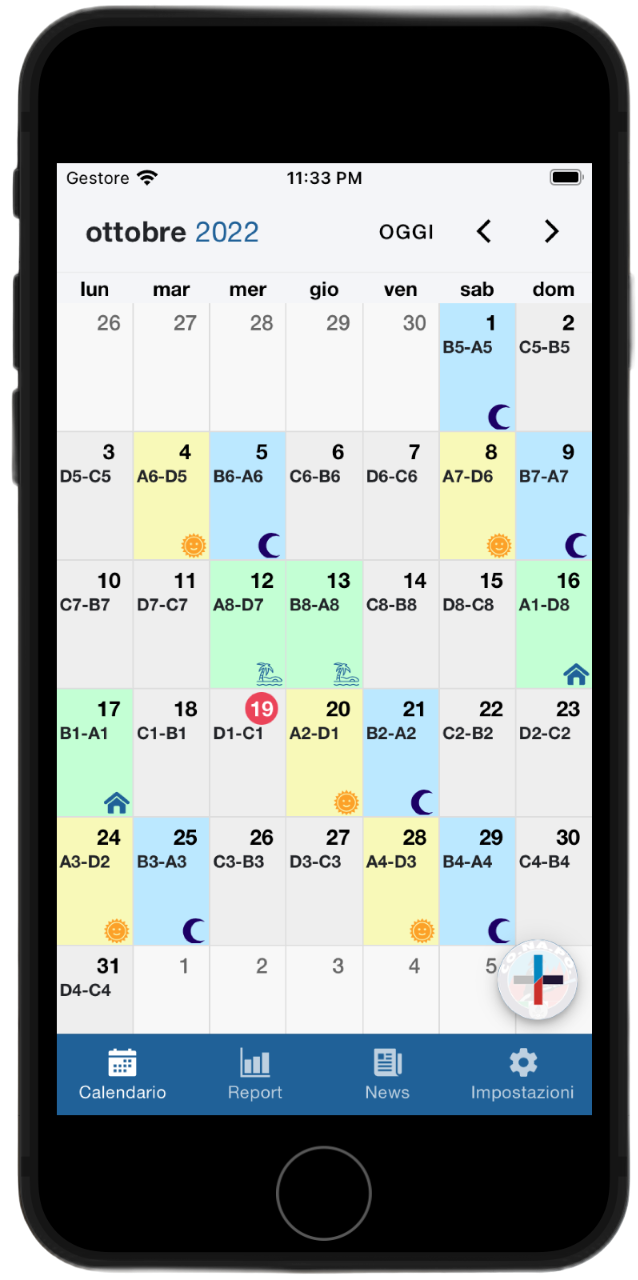
Agenda VVF
A web and mobile platform for quickly checking calendars, shifts, and availability from a smartphone or browser.
Open case study